


Industry
Spotlight
 Reframing Health & Fitness as a Global Public Health Strategy:
Why the convergence is no longer optional and how operators must evolve to lead
Reframing Health & Fitness as a Global Public Health Strategy:
Why the convergence is no longer optional and how operators must evolve to lead

The convergence of health, healthcare, and fitness is no longer theoretical. It is happening now,driven by aging populations, unsustainable healthcare costs, productivity pressures, and a growing body of evidence supporting exercise as a foundational intervention.

Reframing Health & Fitness as a Global Public Health Strategy:
Why the convergence is no longer optional and how operators must evolve to lead
For decades, the global health and fitness sector spoke about “integration” with healthcare as a future aspiration. That future has arrived, not through ideology, but through economic necessity.
Physical inactivity is no longer just a public health concern; it is a financial liability. In the United States alone, physical inactivity drives more than $117 billion annually in direct healthcare costs, with hundreds of billions more tied to lost productivity and premature mortality. Globally, the economic burden is measured in the trillions, placing sustained pressure on employers, insurers, governments, and health systems.
These costs show up in strained public budgets, rising insurance premiums, workforce attrition, and growing demand for downstream medical services. As a result, health systems are increasingly seeking partners who can deliver scalable, evidence-informed movement interventions before and after clinical care. Fitness operators are no longer optional participants in this conversation; they are unavoidable stakeholders.
The convergence of health, healthcare, and fitness is no longer theoretical. It is happening now, driven by aging populations, unsustainable healthcare costs, productivity pressures, and a growing body of evidence supporting exercise as a foundational intervention. The question is no longer if fitness belongs in the health ecosystem, but how operators responsibly and profitably position themselves within it.
Medically Based Fitness as a Second Line of Business
Outcomes-based medical fitness programming designed to treat and manage diagnosed health conditions is not a niche experiment, nor is it dependent on reimbursement to be viable. It represents a legitimate second line of business for forward-thinking operators.
Success requires a critical mindset shift: these offerings cannot live exclusively behind a traditional membership paywall. Programs supporting cardiac rehabilitation, cancer survivorship, metabolic disease, fall prevention, or post-rehabilitation care must be accessible through referral pathways and structured around episodes of care, not monthly dues. They must be positioned as health services, not premium fitness add-ons.
Operators that force these programs into legacy membership models limit both access and scale. Those that decouple them unlock new audiences, new partnerships, and new revenue streams.
Operational Reality: Not Business as Usual
Declaring alignment with healthcare is easy. Operating like a healthcare-adjacent organization is not.
This shift requires upgrades across five areas: staffing with defined roles and scopes of practice; evidence-informed programming and protocols; data collection that moves beyond attendance to functional and quality-of-life outcomes; health data privacy policies appropriate for sensitive information; and intentional referral, documentation, and risk-management procedures.
This is where many operators stall, not because the opportunity lacks demand, but because the operational lift feels unfamiliar.
Prevention Is the Destination—But Disease Management Is the On-Ramp
Prevention is widely recognized as the future of health systems, yet it consistently trails disease management because it is harder to measure, attribute, and reimburse.
Disease management provides a pragmatic starting point. Diagnosed populations, defined referral triggers, and shorter outcome feedback loops make value easier to demonstrate. In practice, disease management is not a detour from prevention, it is the on-ramp that funds the staffing, data systems, and governance structures prevention ultimately requires.
From Amenity to Infrastructure
Reimbursement for exercise services remains fragmented globally. In the near term, health-oriented fitness and longevity services will largely be self-pay. When positioned around outcomes rather than access, this model expands the sector beyond its historic 20% market penetration.
Globally, the sector is shifting from discretionary lifestyle amenity to essential health infrastructure. This is not about becoming healthcare. It is about earning a seat beside it.
That distinction will define the next decade of growth and relevance for the global health, fitness, and wellness industry.
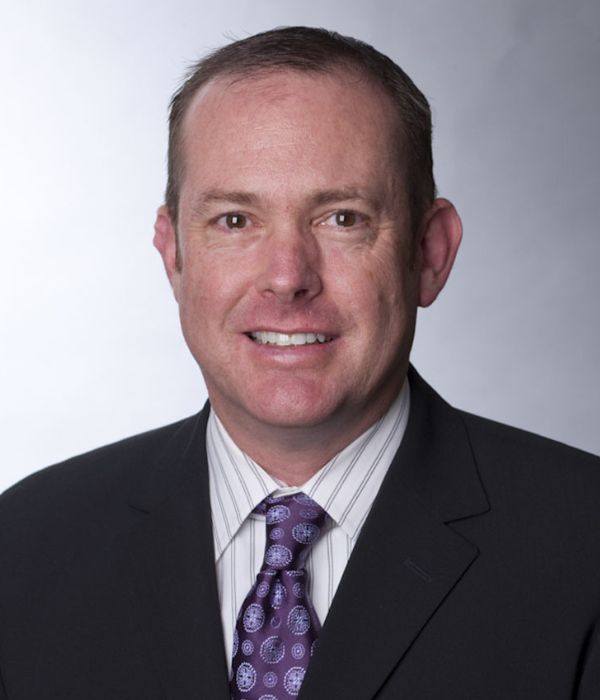
About Graham Melstrand
Graham Melstrand is the Founder and CEO of ActivSport Advisory and a 35-year veteran of the global health and fitness industry. His work focuses on advancing the exercise profession and expanding equitable access to, and participation in, physical activity programs and interventions across community, clinical, and commercial settings.
Graham brings deep experience in health advocacy and government relations, having helped shape best practices and requirements for the education, professional credentialing, and employment of exercise professionals and health coaches in the United States and internationally. Over the course of his career, he has held senior leadership roles at the American Council on Exercise and has served on numerous industry and public-health boards and committees, including the Coalition for Registration of Exercise Professionals (USREPS), the Physical Activity Alliance, the Committee on the Accreditation of Exercise Science, and the Medical Fitness Association Facility Standards and Outcomes Committees. He has also contributed to advisory efforts with Special Olympics, NSF International, and World Active.
Through ActivSport Advisory, Graham works with operators, associations, and policymakers to position physical activity as essential health infrastructure in a rapidly evolving global wellness economy.

Industry Opinion Leaders
Want to Contribute a Piece to Our Spotlight Features?
Contact us to find out more.